English Immersion
English goes beyond the classroom.
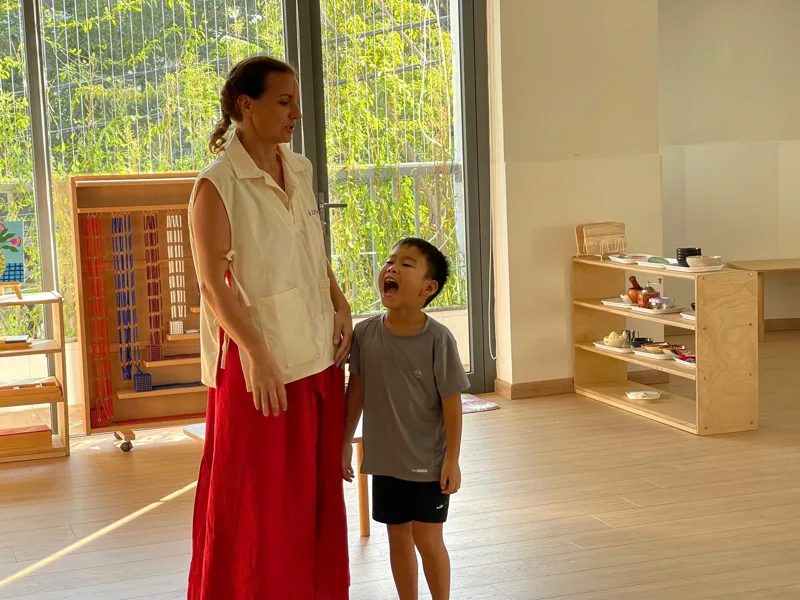
One Person, One Language.
One Person, One Language helps children discover English through the familiar voice of a teacher they trust.
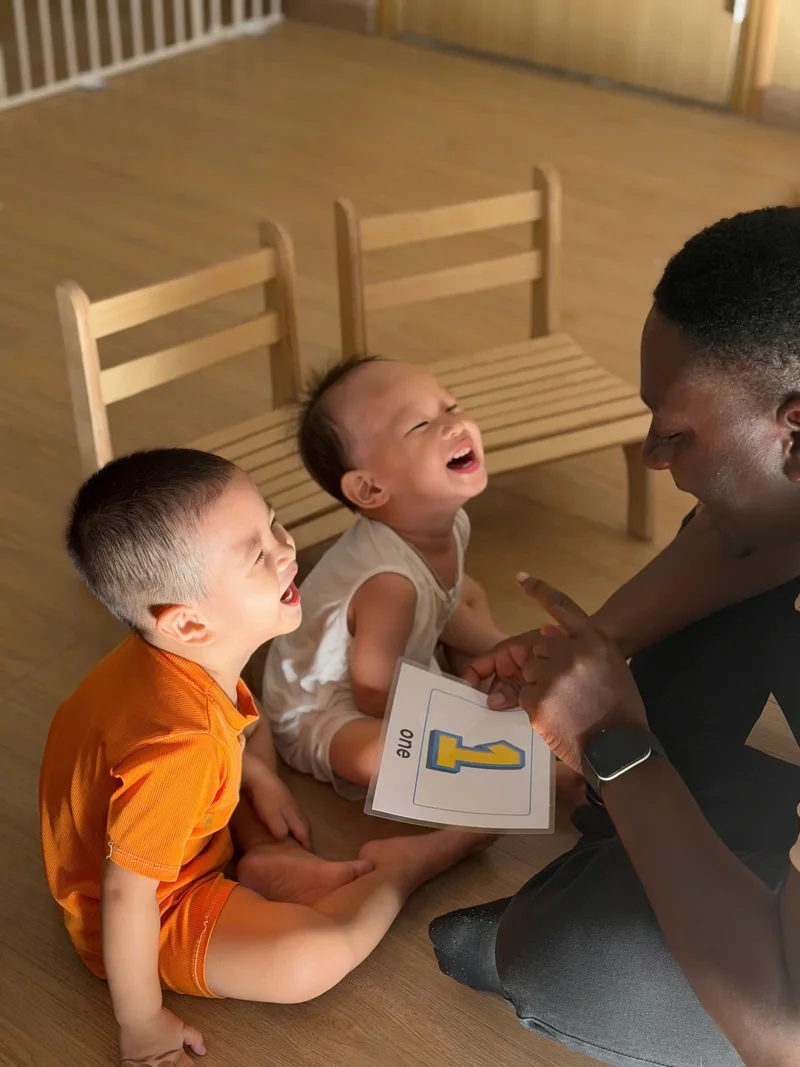
Toddler.
In Toddler, children can understand and respond to a familiar invitation with an action before using words.
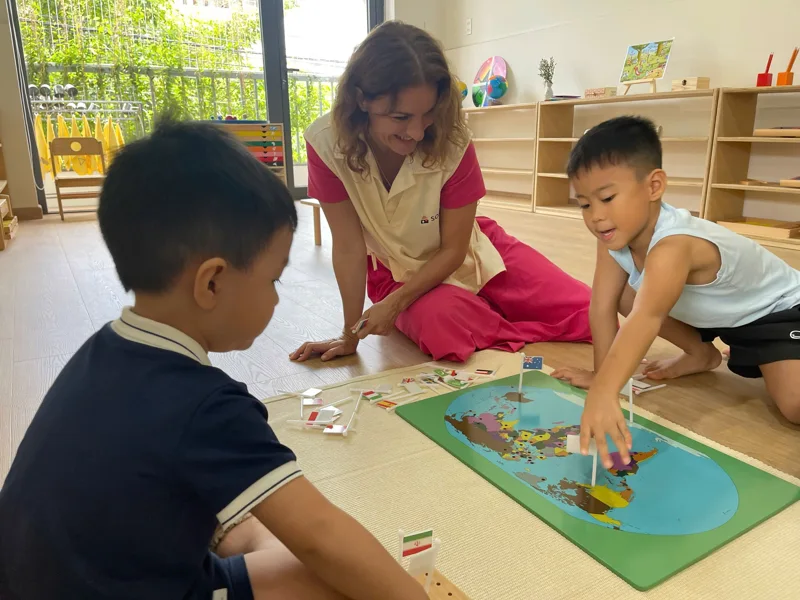
Primary.
In Primary, children use English to describe what they see, ask questions and share discoveries.
The science of early language learning
Children become familiar with language through what they hear, do and share with others. These five topics explore what researchers have observed.
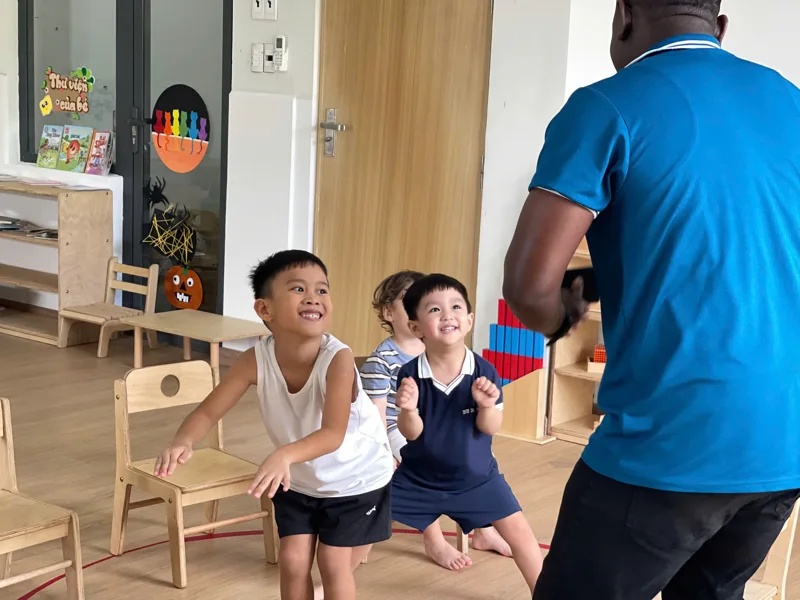
Early speech sounds
Children hear the difference early.
In their first year, children’s ability to distinguish sounds adapts to the languages they hear. Live interaction can help them become familiar with new speech sounds.
Back-and-forth conversation
A question. A moment to answer.
A study of children aged four to six found an association between conversational turns and language skills. At Sover, teachers make time for children to respond in everyday conversations.
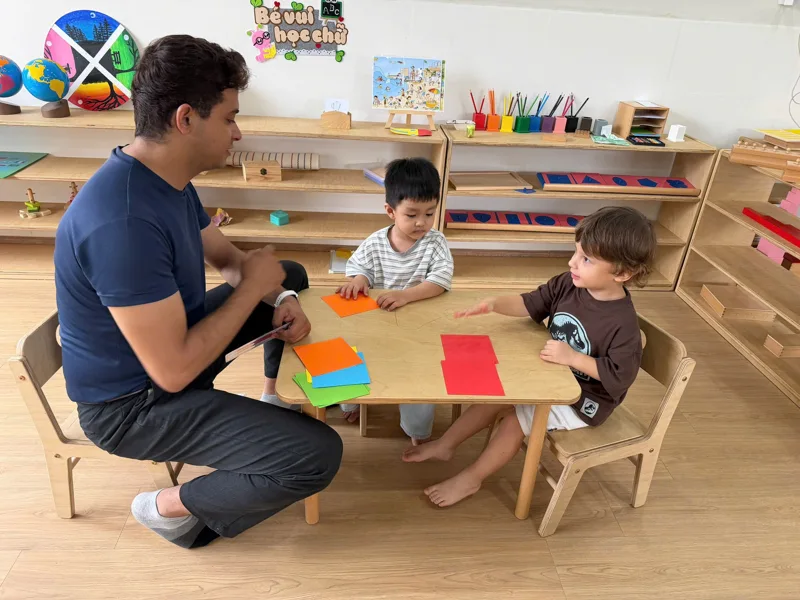
Learning through experience
Words go with what children do.
As children pour water or organise materials, teachers connect language with real objects and actions. Supportive interaction, language at the right level and rich ideas all matter.
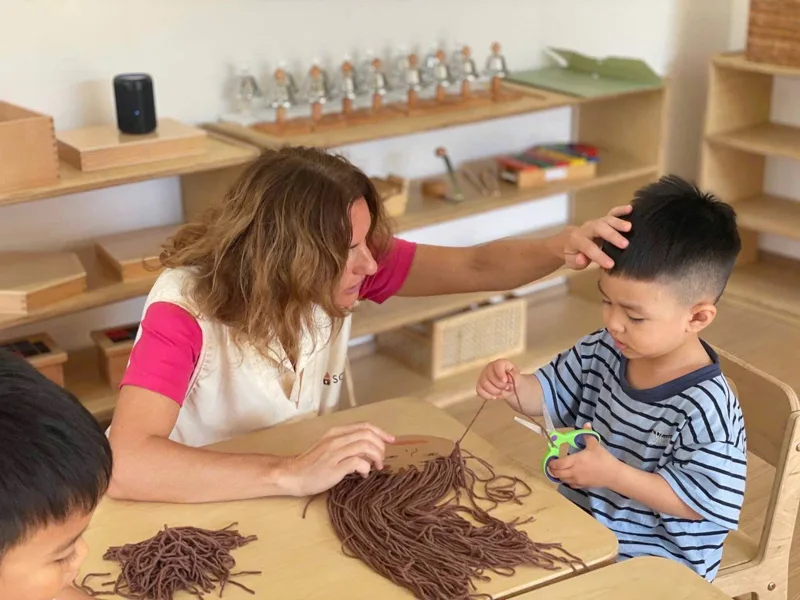
Creative thinking
An idea can be expressed in many ways.
A review of 39 studies found a positive association between bilingualism and creativity.
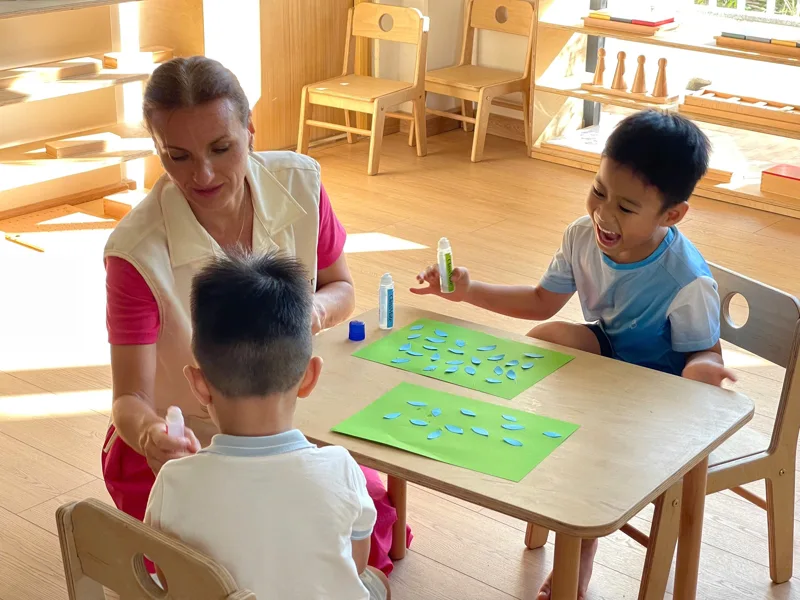
Growing up with two languages
Children can grow up with both languages.
Skills in each language develop through the experiences children have with it: the more opportunities they have to hear and use it, the more confident they become.
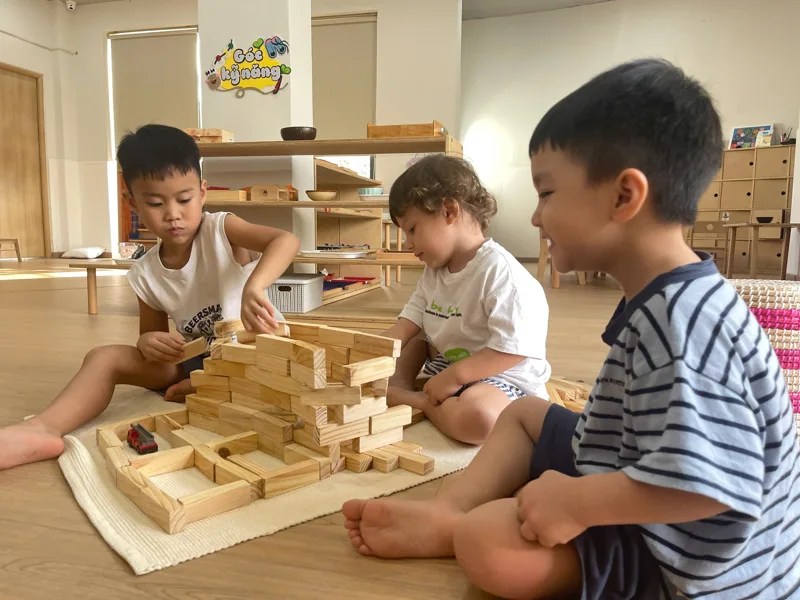
How will we notice progress?
We notice how children understand, participate and express themselves in everyday interactions. Families can look for small changes as each child progresses at their own pace.

Understanding
Children recognise familiar words and phrases in their everyday activities.

Participating
As children understand what is happening, they find more ways to respond and take part.

Expressing
Through these exchanges, children find more ways to express what they need, think or feel.
A few things parents ask.
Can my child start without knowing any English?
Children can begin by watching. Teachers use gestures, pictures and familiar objects to help them understand what is happening. When they feel comfortable, they might respond with a nod, an action or a word. Teachers give children time to settle in at their own pace.
What role does Vietnamese play as my child learns English?
Vietnamese remains important for connecting with family and expressing what children need. At school, teachers use their language consistently and welcome responses in Vietnamese, English or gestures. At home, keep talking, telling stories and singing in the language that comes most naturally to your family.
Will my child have English lessons all day?
English is used in many activities throughout the day, but children do not have to sit in lessons continuously and teachers do not need to speak all the time. There is still time to concentrate, move, rest and explore.
Does my child have to speak English?
Teachers invite children to communicate in whatever way they are ready and able to use.
Can learning two languages cause confusion or a speech delay?
Exposure to multiple languages by itself does not cause a speech or language disorder. Families with specific concerns about their child’s development can speak with a qualified speech-language professional.
How soon will my child speak English?
There is no single timetable for every child. Progress depends on where each child begins, their experiences, interactions and individual pace of development.